
At some point after many long stays, a reflection often appears quietly, almost unexpectedly.
It is not about the place.
It is not about the facilities.
It is not even about the city.
It is about the rhythm that was formed while living there.
Because when you look back carefully, what stands out is not individual days or events.
It is the pattern those days created.
A way of waking up.
A way of moving through work.
A way of returning to rest.
A way of ending the day.
At the beginning, none of this feels significant.
Life feels like a sequence of separate actions.
But repetition slowly connects those actions into a flow.
And that flow becomes rhythm.
In a long stay, especially in a stable environment, rhythm forms without effort.
Not because you plan it.
But because you repeat it.
The same kind of mornings begin to feel familiar.
The same transitions between activity and rest begin to feel natural.
Even the silence of the space begins to feel like part of the routine.
Over time, the mind stops experiencing each day as something new to adjust to.
Instead, it starts moving within a pattern it already understands.
And that understanding creates ease.
Because rhythm removes the need for constant decision-making.
You no longer have to mentally prepare for every part of the day.
Things begin to happen in a more automatic flow.
And when life becomes more automatic in a stable way, mental effort reduces.
In a city like Bangalore, where external life often demands attention, flexibility, and responsiveness, this internal rhythm becomes especially important during long stays.
Because outside, life may remain unpredictable.
But inside a stable environment, rhythm creates continuity.
And continuity is what allows the mind to rest between actions, not just after them.
This is a subtle but important difference.
When there is no rhythm, rest only happens at the end of exhaustion.
But when rhythm exists, rest is built into the structure of the day itself.
Moments of pause feel natural.
Transitions feel smoother.
Even ordinary routines feel less mentally heavy.
This is why long stays often feel different from short experiences.
Short stays are about adjusting.
Long stays are about settling into rhythm.
And once rhythm is established, life begins to feel less like a series of separate efforts and more like a continuous flow.
This is also why people often find it difficult to explain long stays in simple terms afterward.
Because rhythm is not a single event.
It is an accumulated experience.
It only becomes visible when it is no longer present.
When life changes again.
When routines shift.
When the structure disappears.
Then the absence of rhythm becomes noticeable.
And what remains is the memory of how steady life once felt.
This is also why service apartments are increasingly chosen for long stays in Bangalore. People are not only selecting accommodation for function or convenience.
They are choosing environments where a stable rhythm of daily living can form naturally over time.
They want spaces where life does not constantly reset.
They want environments where routine becomes fluid instead of fragmented.
They want places where daily living develops a steady, predictable flow.
At Sagar Niwas, this understanding shapes the experience.
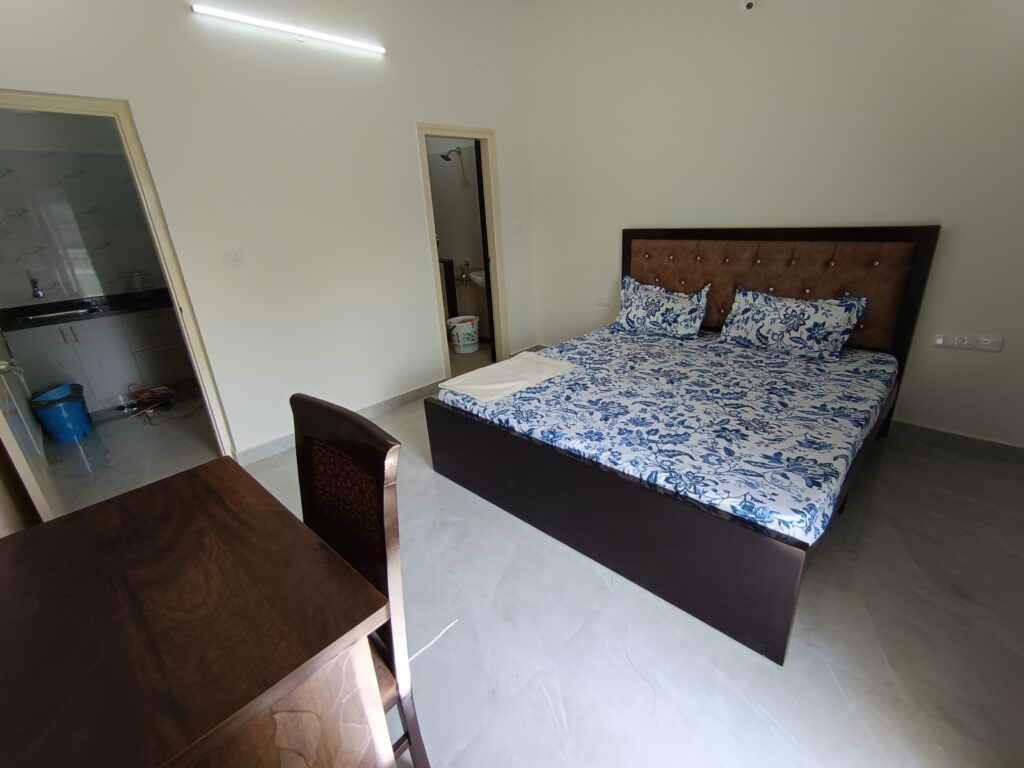
The focus is not only on providing accommodation, but on creating environments where long stays naturally allow a calm, consistent rhythm of life to develop in Bangalore.
Whether it is a studio room, 1BHK, or 2BHK setup, the intention remains the same:
to create a space where life does not feel like repeated effort, but like a gentle rhythm that carries each day forward in a steady, natural flow.
Because in the end, long stays quietly reveal a simple truth:
You were not just living somewhere.
You were learning a rhythm that quietly shaped how life felt every single day.
For bookings and enquiries
www.sagarniwas.com
phone: +91 7892636021
email: reachsagarniwas@gmail.com