
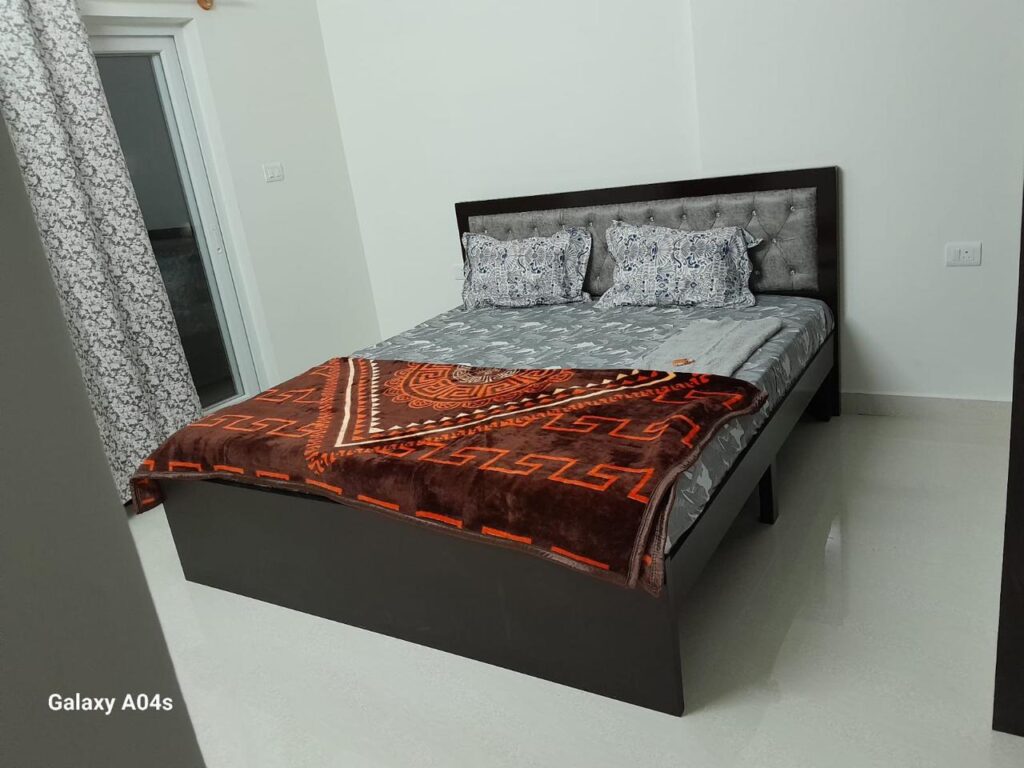
At the beginning of most long stays, people often expect change to be the most important part of the experience.
A new city.
A new routine.
A new environment.
A new phase of life.
Change feels meaningful at first because it represents movement and progress.
But something subtle happens as days turn into weeks.
The excitement of change slowly settles.
And what begins to matter more is not what is new, but what feels stable.
This shift is natural.
Human beings are not designed to remain in a constant state of adjustment. While change can feel stimulating for a short time, the nervous system eventually begins to seek consistency.
Especially during long stays in a busy city like Bangalore, where external life already contains enough movement:
traffic that changes every hour,
work that shifts daily,
plans that evolve constantly,
and environments that rarely stay still for long.
Inside all this external motion, the mind begins craving something opposite.
Not more stimulation.
Not more variation.
But stability.
A place that feels predictable.
A routine that feels familiar.
An environment that does not require constant emotional adjustment.
This is where long-term comfort becomes very different from short-term comfort.
Short-term comfort can rely on novelty and freshness.
Long-term comfort depends on emotional steadiness.
Because when life continues for weeks or months in the same place, the nervous system stops evaluating the space based on first impressions. Instead, it evaluates how consistently the space supports emotional balance.
Does it feel the same in a good way every day?
Does it allow recovery after stress?
Does it support routine without friction?
Does it feel emotionally steady, even when external life is not?
These questions become more important than features or appearance.
Over time, people begin to realize that stability is not boring.
It is necessary.
Because without stability, the mind never fully relaxes. It remains slightly alert, slightly uncertain, slightly engaged in adjusting to change.
And that constant adjustment quietly consumes emotional energy.
A stable environment removes that invisible effort.
It does not ask the mind to keep adapting.
It does not create emotional unpredictability.
It simply remains consistent enough that the nervous system can settle into it.
This is why routine becomes easier in such environments.
Mornings feel familiar.
Evenings feel predictable.
Rest feels more complete.
The mind stops spending energy on understanding the environment and starts using that energy for living inside it.
In a city like Bangalore, where life outside is already dynamic and fast-moving, this internal stability becomes extremely valuable.
Because without it, everything feels slightly more tiring than it should.
But with it, even busy days feel more manageable.
This is one of the reasons service apartments continue becoming increasingly preferred for long stays. Modern guests are no longer primarily looking for novelty or constant change.
They are looking for environments that remain emotionally steady over time.
They want places where life feels sustainable.
They want spaces that reduce emotional fluctuation.
They want surroundings that support long-term balance instead of constant adjustment.
At Sagar Niwas, this understanding shapes the experience.
The focus is not only on providing accommodation, but on creating environments where guests can experience emotional stability throughout their stay in Bangalore.
Whether it is a studio room, 1BHK, or 2BHK setup, the intention remains the same:
to create a space where life does not feel like constant adaptation, but steady, predictable living that supports emotional ease over time.
Because in the end, people don’t remember long stays for how much changed during them.
They remember them for how stable life felt while everything outside was changing.
For bookings and enquiries
www.sagarniwas.com
phone: +91 7892636021
email: reachsagarniwas@gmail.com