
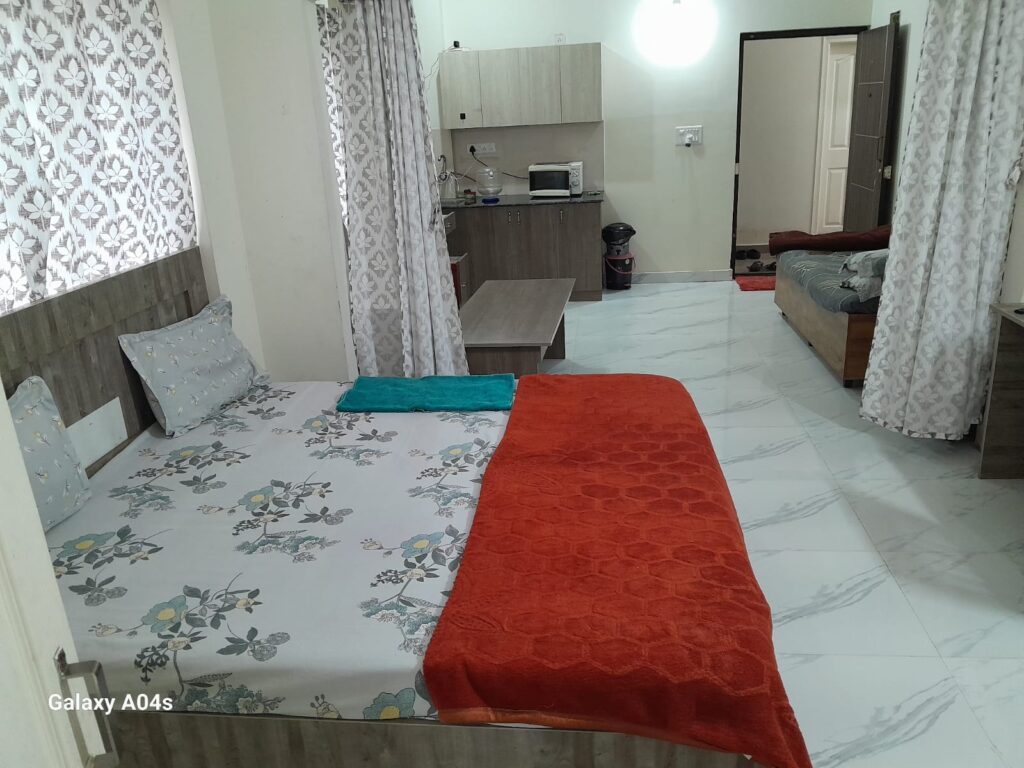
Most people think routine is created through discipline.
They believe better routines come from motivation, time management, productivity habits, or strict schedules. While those things certainly matter, there is another influence that quietly shapes routine every single day.
The environment someone lives in.
This becomes especially important during long stays in Bangalore, where daily life already demands enormous emotional and mental energy. People arrive with ambitious plans, work responsibilities, family transitions, or personal goals. They want to stay productive, organized, and emotionally balanced.
But many underestimate how strongly environment affects the ability to maintain those things consistently.
Human beings do not build routine through willpower alone.
Routine is heavily influenced by surroundings.
If the environment feels peaceful and emotionally supportive, healthy routines begin forming naturally. The nervous system relaxes enough for life to flow smoothly:
sleep becomes regular,
mornings feel lighter,
evenings become calmer,
and daily tasks require less emotional effort.
But when the environment feels mentally tiring or emotionally unstable, routine becomes difficult no matter how disciplined a person tries to be.
This creates a hidden form of emotional exhaustion.
People begin feeling like everyday life requires too much effort. Simple tasks feel heavier than usual. Motivation decreases slowly. Even relaxation feels incomplete because the nervous system never fully settles.
Most assume the problem is personal stress.
But often, the environment itself is quietly disrupting emotional rhythm every single day.
One reason this happens is because the brain constantly responds to emotional signals from physical space. Human beings naturally seek environments that feel calming, organized, and psychologically safe. When a space creates subtle tension, the nervous system remains slightly alert all the time.
This tension may appear small initially.
But over weeks, it affects everything:
sleep quality,
mental clarity,
emotional patience,
energy levels,
and consistency of routine.
That is why some accommodations begin feeling emotionally exhausting after extended stays even if they look perfectly acceptable at first.
The environment never truly supports daily living.
Routine feels forced instead of natural.
A supportive environment creates the opposite experience.
The moment someone begins feeling emotionally comfortable inside a space, routine slowly stabilizes on its own. Mornings stop feeling mentally heavy. Evenings become emotionally restorative. The person no longer spends energy adjusting to the environment every day.
Instead, emotional energy becomes available for living normally again.
This emotional shift changes how people experience Bangalore itself.
A person with emotional stability usually handles the city far more comfortably. Traffic feels manageable. Work pressure feels temporary rather than overwhelming. Daily challenges stop emotionally draining them because the nervous system has a consistent place to recover.
Without that recovery environment, even small disruptions begin feeling emotionally exhausting.
This is one reason many professionals staying in Bangalore eventually realize that accommodation quality affects productivity more deeply than expected.
People perform differently when routine feels emotionally supported.
They focus better.
They recover faster after stressful days.
They maintain emotional balance more consistently.
The environment quietly strengthens their ability to function well every day.
Another important factor is emotional predictability. Human beings psychologically depend on familiar patterns. Repeated positive routines create a sense of control and stability, especially during periods of change or uncertainty.
Long stays often happen during emotionally important phases of life:
new jobs,
business growth,
relocation,
medical treatment,
or career transitions.
During these periods, routine becomes emotionally grounding.
A good environment protects that grounding.
This is why modern travelers increasingly prefer accommodations that feel livable rather than temporary. People no longer want rooms that simply look attractive for short stays.
They want environments where life itself feels easier.
They want enough space to settle naturally.
They want evenings that feel peaceful.
They want mornings that begin calmly instead of mentally heavy.
This is one reason service apartments continue becoming more valuable in Bangalore. They support emotional continuity instead of constant temporary adjustment.
Guests begin living naturally instead of merely staying temporarily.
At Sagar Niwas, this understanding shapes the overall guest experience.
The focus is not only on providing accommodation but on creating environments where guests can comfortably build stable daily routines during their time in Bangalore.
Whether someone chooses a studio room, a 1BHK apartment, or a larger 2BHK setup, the intention remains the same:
to create living spaces where everyday life feels smoother, emotionally calmer, and more sustainable.
Because true comfort often appears quietly through routine itself.
It appears when someone wakes up feeling mentally lighter.
It appears when evenings naturally become peaceful.
It appears when life starts flowing without constant emotional resistance.
It appears when the environment slowly begins feeling personally familiar and emotionally grounding.
These experiences shape emotional well-being far more deeply than most people realize.
In the end, people rarely remember only the facilities or appearance of a stay.
They remember how daily life felt while living there.
Whether routine felt easy or exhausting.
Whether evenings restored emotional energy or continued stress.
Whether life gradually became calmer or emotionally heavier over time.
And very often, all of those experiences quietly began with the environment surrounding them every single day.
For bookings and enquiries
www.sagarniwas.com
phone: +91 7892636021
email: reachsagarniwas@gmail.com