
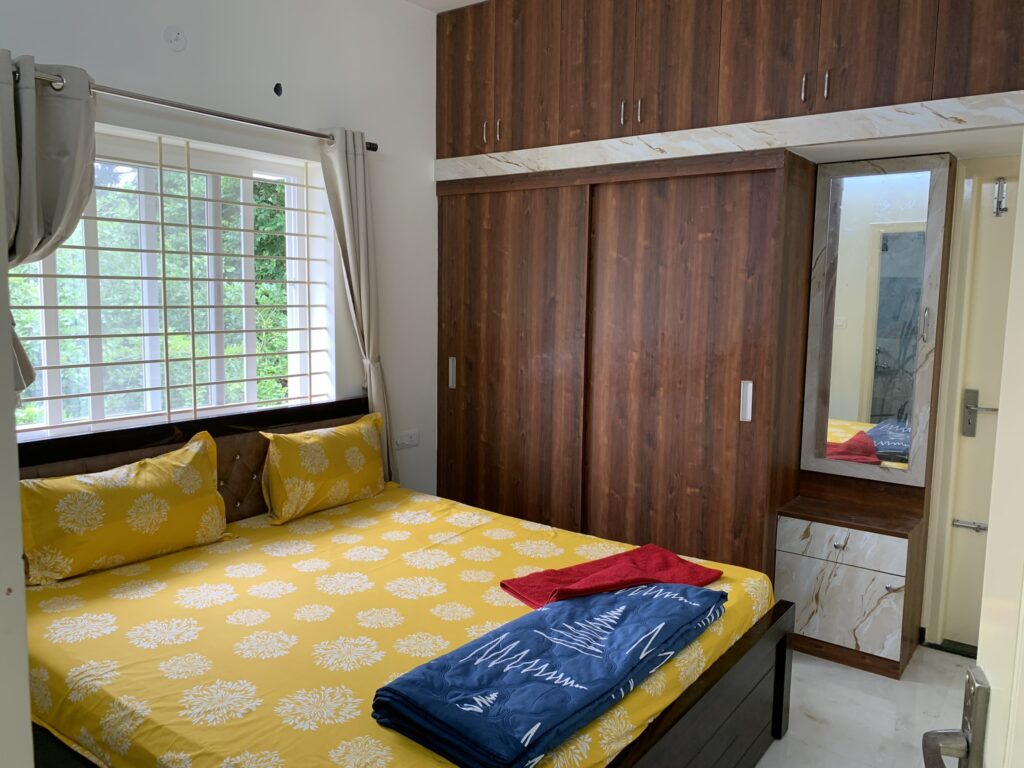
Most people underestimate accommodation.
When planning a trip or relocation to Bangalore, they usually focus on the obvious things first. They think about office location, transportation, budget, nearby restaurants, or how quickly they can settle into work. Accommodation often becomes just another item on the checklist — something practical that needs to be arranged quickly before moving on to more “important” matters.
But after a few days in the city, reality slowly changes that perspective.
Because the truth is, where you stay affects almost everything.
It affects how you sleep.
How you think.
How quickly you adapt.
How productive you feel.
How much stress you carry every day.
And most importantly, it affects how Bangalore itself feels to you.
Two people can live in the same area, work similar jobs, follow similar schedules, and still have completely different experiences of the city — simply because of the environment they return to every evening.
That difference is far more powerful than people realize.
When someone first arrives in Bangalore, the city feels fast.
The traffic moves endlessly. Office schedules are demanding. Distances look short on maps but somehow take much longer in reality. New visitors often spend the first few days trying to mentally catch up with the pace of the city.
At first, the excitement hides the pressure.
There’s energy in discovering a new place. You explore roads, try local food, understand work culture, and slowly begin adjusting your schedule. During this phase, people rarely pay attention to their accommodation beyond the basics.
As long as there’s a bed and a place to keep luggage, they think everything is fine.
But somewhere around the fourth or fifth day, something begins changing.
The temporary excitement fades slightly, and routine starts taking over. That’s when your accommodation quietly becomes one of the most important parts of your life.
The room is no longer just a room.
It becomes your recovery space.
Your thinking space.
Your quiet space.
Your emotional reset point.
And if that environment doesn’t support you properly, the effects begin appearing slowly.
One of the biggest misconceptions people have about comfort is believing that comfort means luxury.
It doesn’t.
Real comfort is not expensive decoration or fancy interiors. Real comfort is when life flows naturally inside a space.
A truly comfortable stay is one where you stop noticing friction.
You don’t struggle to organize your belongings.
You don’t feel mentally tired inside your own room.
You don’t constantly think about adjusting your routine.
Everything simply works.
That feeling is difficult to describe until you experience the opposite.
Many accommodations look acceptable during booking. Photos appear clean. Pricing looks attractive. Location seems convenient. But once daily life begins, small problems start revealing themselves.
The room feels slightly cramped.
There’s no comfortable place to sit and relax.
Eating becomes inconvenient.
Your belongings never feel properly organized.
None of these issues seem serious individually.
But human psychology doesn’t respond only to major stress. It responds to repeated small discomforts.
And repeated discomfort slowly drains mental energy.
This is something many professionals experience without fully understanding why.
They wake up feeling slightly tired even after enough sleep. They feel unusually irritated at the end of the day. They spend more time outside than necessary because they don’t enjoy being inside their room.
At first, they blame traffic, workload, or the city itself.
But often, the real problem is simpler.
Their environment never allows their mind to fully relax.
Human beings are deeply influenced by space. The layout of a room, the freedom to move naturally, the ability to settle into routine — all these things affect emotional stability more than most people realize.
A cluttered or restrictive environment keeps the brain slightly alert all the time.
You may not consciously notice it, but your mind keeps processing:
Where do I keep things?
Why does this feel inconvenient?
How do I adjust around this limitation?
That constant adjustment creates invisible stress.
A better living environment removes that mental friction.
And when friction disappears, energy returns naturally.
One of the clearest signs of a good stay is something very simple:
You look forward to returning to it.
This matters more than people think.
At the end of every day in Bangalore, whether you are working, traveling, attending meetings, or managing personal responsibilities, there is always one final moment — the return.
You open the door to your accommodation and immediately feel something.
Sometimes it’s relief.
Sometimes it’s calmness.
Sometimes it’s disappointment.
Your brain reacts instantly to space.
A welcoming environment tells your nervous system:
“You can relax now.”
A cold or uncomfortable environment does the opposite. Even after sitting down, your body never fully shifts into recovery mode.
This affects sleep quality, emotional balance, and long-term well-being.
That’s why good accommodation is not just about staying somewhere. It’s about recovering properly every single day.
Another important factor people ignore is routine.
Human beings function best when routines become stable. Even during temporary stays, the mind naturally tries creating patterns:
morning coffee, evening relaxation, organized belongings, familiar surroundings.
When accommodation supports routine, emotional stability increases.
This is especially important for people staying in Bangalore for longer periods — professionals, project teams, relocating families, medical visitors, remote workers, or students.
These guests are not simply passing through the city for a single night. Their accommodation becomes part of their daily life.
And daily life requires more than functionality.
It requires emotional ease.
That’s why service apartments have become increasingly important in cities like Bangalore. People are moving away from purely transactional hotel experiences and looking for spaces that feel livable.
They want flexibility.
They want breathing space.
They want environments that allow them to feel normal instead of temporary.
At Sagar Niwas, this understanding becomes extremely important.
The goal is not simply to provide rooms. The goal is to create environments where people can genuinely settle into life comfortably.
Whether someone chooses a studio room, a 1BHK apartment, or a 2BHK setup, the experience is designed around practical living.
Because real comfort comes from everyday ease:
having enough space,
following your own routine,
cooking when you want,
resting properly after long days,
and feeling mentally settled instead of constantly adjusting.
These things may sound simple, but they completely shape how a person experiences the city.
Interestingly, the best stays often become invisible.
You stop thinking about them because they quietly support your life without creating stress.
That is the true sign of good accommodation.
It doesn’t interrupt your day.
It doesn’t demand constant adjustment.
It simply fits into your life naturally.
And when that happens, everything else improves too.
Work becomes easier.
Rest feels deeper.
Routines become stable.
The city feels less exhausting.
Even emotionally, you begin feeling more grounded.
That’s the hidden psychology of comfortable living.
People often think they are booking a room.
In reality, they are shaping their entire experience of Bangalore.
And once you understand that, accommodation stops being a small decision — and becomes one of the most important ones.